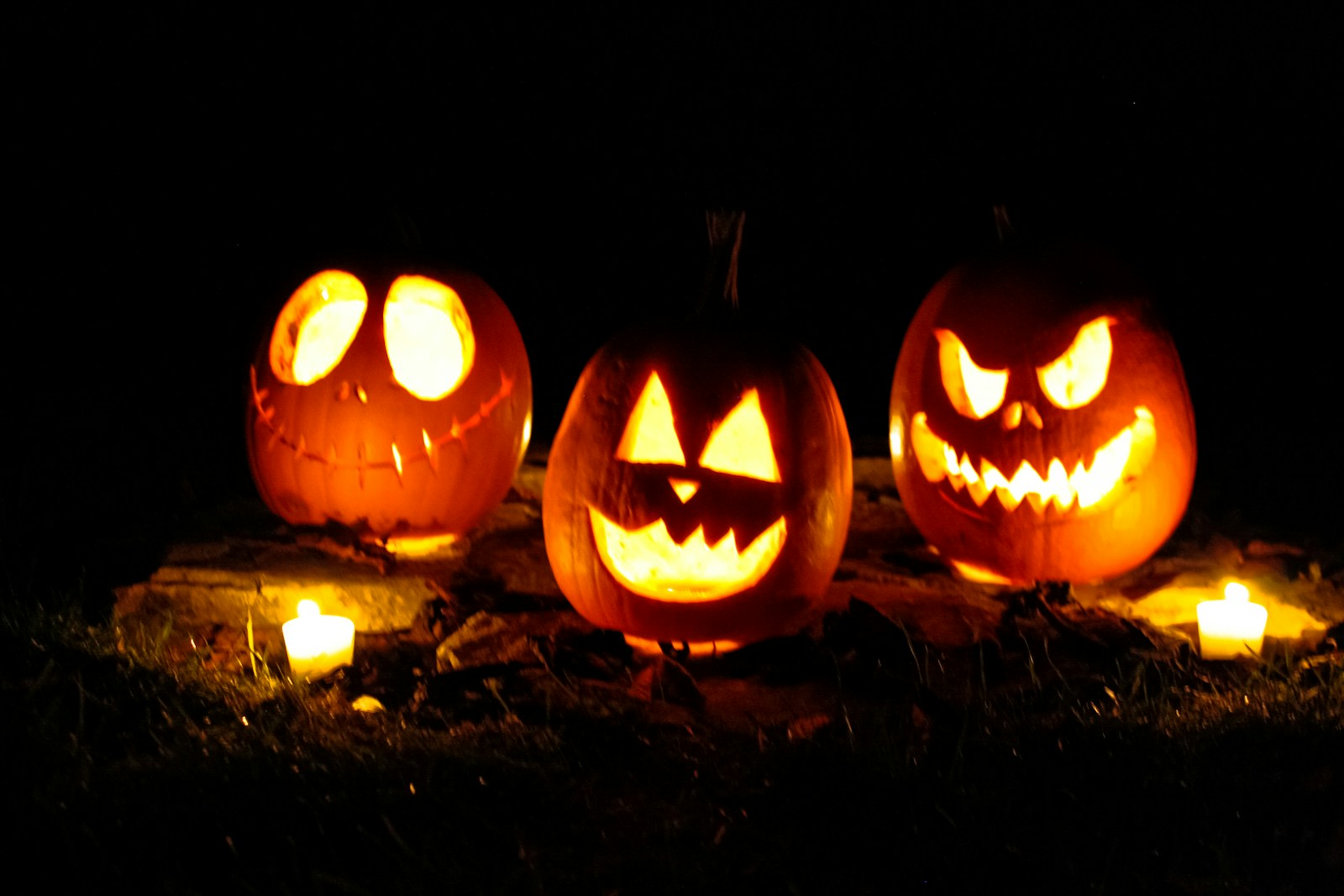
If you’ve ever tried to carve a pumpkin, you know it’s not as easy as it seems. The knife gets stuck, one eye ends up bigger than the other, and your jack-o’-lantern looks less “terrifying” and more “mildly concerned.” Necessity is the mother of invention, so it’s no surprise that in 1979, Christopher A. Nauman came up with a better way to carve a pumpkin, and then patented it. The Patent Office apparently enjoys a little drama, because U.S. Patent No. 4,296,659: Jack-O-Lantern Forming Method, was granted on October 27, 1981, four days before Halloween.

Continue Reading Trick or Claim? What a Pumpkin Patent Teaches Us About Method Claims

Nobody likes the grammar police. Patent lawyers, unfortunately, may be the exception.

In Enanta Pharmaceuticals, Inc. v. Pfizer Inc. No. 2025-1427 (Fed. Cir. June 23, 2026), one character did a lot of damage. The difference between C2 and C1 cost Enanta the priority date of its provisional application—and led the Federal Circuit to affirm that the challenged claims were anticipated.

Turns out proofreading really can be worth millions.

But the case raises a more interesting question: Even if Enanta had gotten that one number right, did its provisional actually demonstrate possession of the later-claimed invention?

Enanta’s patent (U.S. Patent No. 11,358,953) covered compounds for inhibiting coronavirus replication and claimed priority to a provisional application filed in July 2020.

Continue Reading The One-Carbon Mistake That Cost A Patent Its Priority Date

In Any Given Sunday, Al Pacino’s character famously describes American football as a game of inches. In this football—umm, soccer—that line has become almost literal: joy, heartbreak, and World Cup survival can now turn on a toe, a shoulder, or a few millimeters.

Just ask Iran.

For a few glorious seconds, Iran had done it. In the 93rd minute against Egypt, Shoja Khalilzadeh bundled the ball into the net. Seattle Stadium erupted. Players sprinted toward the corner flag. Millions of Iranian fans around the world celebrated what appeared to be the winning goal that would send Iran through. Then came the dreaded signal: VAR (Video Assistant Referee). In an instant, joy was shown the red card.

After a lengthy review, the goal disappeared. An Iranian attacker had been offside by mere millimeters when the shot was taken. The celebration lasted longer than the goal itself—a brutal reminder that, in modern football, even a toe can be caught straying past the last defender.

Sound familiar?

Continue Reading From Ecstasy to Agony: The Patented Technology Behind VAR’s Most Heartbreaking World Cup Moments

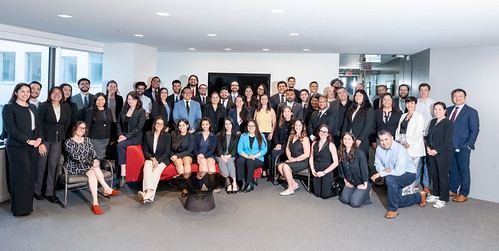
Seyfarth had the honor of participating in and sponsoring the Hispanic National Bar Association (HNBA) VIA Intellectual Property Law Institute (IPLI), a weeklong program held in Washington, DC.

The annual IPLI program offers law students the opportunity to participate in an engaging week of programming with practitioners across the field. Students met with lawyers, judges, regulators, and policymakers from key institutions, including the U.S. Patent and Trademark Office (USPTO), the U.S. Copyright Office, the Federal Trade Commission (FTC), and the U.S. International Trade Commission (ITC). The program also included a visit to the U.S. Supreme Court. The jam-packed week concluded with a closing ceremony and celebratory happy hour for students, volunteers, speakers, and practitioners, hosted by Seyfarth’s Washington, D.C., office.

Continue Reading A Week in Washington, DC: Seyfarth Engages Emerging IP Talent at the HNBA VIA Intellectual Property Law Institute

For years, the debate surrounding artificial intelligence and patents has focused on a relatively simple question: Can AI be an inventor?

At least in the United States, the answer is currently no. Inventors must be natural persons.

Problem solved. Or perhaps not.

While lawyers, courts, and the USPTO have spent the past several years debating whether AI can be listed on a patent application, a more interesting question has quietly emerged.

What happens when AI does not invent the technology, but instead invents the innovation strategy?

Continue Reading When AI Generates the Idea: Rethinking Inventorship in the Age of Innovation Engines

Patent attorneys spend a lot of time explaining two deceptively simple concepts: novelty and obviousness. Both rise and fall on one thing: prior art. Most inventors assume prior art means a patent or some obscure technical paper written by someone surviving on cold brew and conference coffee.

That assumption is wrong.

Prior art is anything…

Artificial intelligence may be global, but patent eligibility remains stubbornly local. A recent decision out of the Supreme Court of the United Kingdom seems to have nudged UK practice for computer-implemented inventions closer to the approach historically taken by the European Patent Office. The decision lowers the threshold for exclusion from patentability, reducing the likelihood…

Seyfarth’s Patent Litigation practice group and partner Lisa Meyerhoff have earned recognition as “Highly Recommended” in World Intellectual Property Review‘s  “USA Patents Rankings” for 2025. The firm earned the designation for its contentious patent work, with Meyerhoff gaining the same honor individually.

The WIPR’s national patent rankings spotlight leading law firms and…

Thanksgiving is finally here, which means the turkey gets its annual moment in the spotlight. For 364 days a year, the turkey is just trying to fit in. It was forced to take on roles it never auditioned for. Turkey bacon. Turkey sausage. Turkey pastrami. Turkey pepperoni on pizza that never asked for it. All…